One will think the days are gone when scammers would e-mail you, share “investment ideas”, promise you huge returns and send you a business website to verify that this is all real. However, these scams keep happening daily; because many people still are not sure how to spot a fake business website.
Since the inception of the Internet, our lifestyles, social interactions, and even our purchasing habits have changed. Ans the scammers and their scamming-patterns have continued to change with it. Infact, the number of scammers attempting to take advantage of innocent internet users seem to be on the rise.
How Do You Know a website is Not Legit
A fake website is not a legitimate destination. It might appear harmless if you don’t examine it closely, but the website might be set up to trick users into disclosing private information, downloading malicious software, or buying products that never exist.
Fake websites are so common and are becoming more elaborate every day, which is why they mimic the ones you know and trust. Although visiting a phoney website isn’t necessarily harmful, it can still put you at risk. For this reason, many sites exist to warn users about fake sites and products. If you have already gotten scammed on a fake business websites, consider reaching out to your bank to request getting your money back. If you are considering conducting business on a website and you’re not sure if the site can be trusted; here are some tips to help you.
URL Inspection
When inspecting a URL, there are a lot of things to look out for, such as:
Domain names are composed of random letters. Currently, the Internet has more than 1.75 billion web pages. There are websites with a wide variety of names, as you can imagine. However, you should be alerted if you discover that the website URL is made up entirely of random letters.

Another red flag to look out for when inspecting URLs is websites that imitate the domain names of popular companies. They could use minor typos or characters with many similarities to mimic legitimate URLs. For instance, (insert image), instead of Netflix.com, they will use Netf!ix.net. One can easily overlook small changes in a company’s name, so you should closely monitor the URL that appears in the address bar.
SSL CERTIFICATION/SECURITY
To verify if a website has an SSL certificate, click the symbol next to the URL and select “Security.”
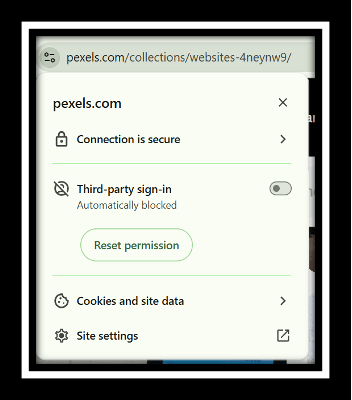

Additionally, search for websites that begin with HTTPS rather than HTTP. Although HTTPS does not ensure security, most websites that use it encrypt your data. In most browsers, a padlock icon appears to the left of the web address, visually indicating that the site is using HTTPS.
Subdomain Trick
Every website has a main domain name, like “meta.com.” An extension of the main domain, like “support.meta.com,” is called a subdomain. Note that the primary domain remains constant, regardless of the extension.
However, one useful tip for spotting a fraudulent website is by being aware that some fraudulent websites deceive victims by altering the domain order. An example is Meta.phoneysite.com, where “Meta” is the subdomain rather than the genuine domain.
Visual Design and Content
It’s very common for scammers to employ cluttered or outdated websites. Check for typos, broken links, or mismatched typefaces, as these could be signs that the website is fake.
Blurred visuals or poor grammar can be warning signs. Another sign of a fake website is one with too many pop-ups or advertisements that make it hard to navigate the page. Most scam websites are hurriedly constructed with little thought given to the details.
Always Look through the “About Us” section. Fake websites frequently offer generic, unclear details or no specifics about the business.
Outrageous product discount
This is a common one for fake e-commerce sites.
Scammers know that most people always search for the best deals, and if you don’t have a lot of money in your bank account, you undoubtedly fall into that category. Without hesitation, they will attempt to entice you with absurdly low costs. However, if something seems too good to be true, it probably is.
For instance, the pricing on this website is outrageous despite the fact that it sells a wide range of goods. They’ve got everything on sale.
Sadly, many continue to fall for occasional low costs, such as purchasing a treadmill for seventy-six dollars.
Usually, scammers will try to scam you with items like appliances, kitchenware, and gadgets that you may not really know the market price. Always make sure to examine everything one more time before completing the purchase.
Fake Contact Information / Customer Reviews
Reputable companies advertise themselves by including their names in email addresses and providing clients with convenient access to services. Fake websites hardly invest the time and energy to carry out these actions. They might use addresses like support43327@gmail.com instead of support@stake.com.
A lot of the phoney websites are likewise devoid of customer service information. A typical company website will encourage you to get in touch with a chatbox popping up. On the other hand, fake websites hope you won’t notice that they don’t have an email address or customer care hotline. In an attempt to appear more authentic, scammers frequently put fake testimonials or reviews on their websites.
However, actual customers who may have been defrauded can also post reviews alerting you to their bad experiences.
Check reviews on and off-site for references to identity theft, fraud, or non-delivery. Remember that scammers now frequently use fake bot accounts on review sites to establish credibility. But keep an eye out for reviews that seem automated.
Use a Legit Website Checker
To be on the safe side, use a website checker to confirm a website’s security status. Tools such as Mozilla’s Observatory offer information about a site’s security status, such as malware, phishing, or weak encryption.
Conclusion
Staying cautious and conducting due diligence will help you avoid spam sites. This checklist will provide the information you need to safeguard against online fraud and protect your internet experience. You can pay for fake/non-existent products from a fake online shop. Attempting to purchase from fake websites puts you at risk of stealing your credit card information, losing money, or receiving counterfeit goods.
Giving up private information that could lead to identity theft. Scammers can obtain your personal information by building websites that look like trustworthy businesses. They can steal your identity and money if they have your contact details or bank information. Spotting a fake website is a skill everyone should have. To save time, money, and a great deal of stress, here’s a guide that can help when you purchase online, interact with a stranger online, or access your bank account.


 The Content Shop
Leave a comment